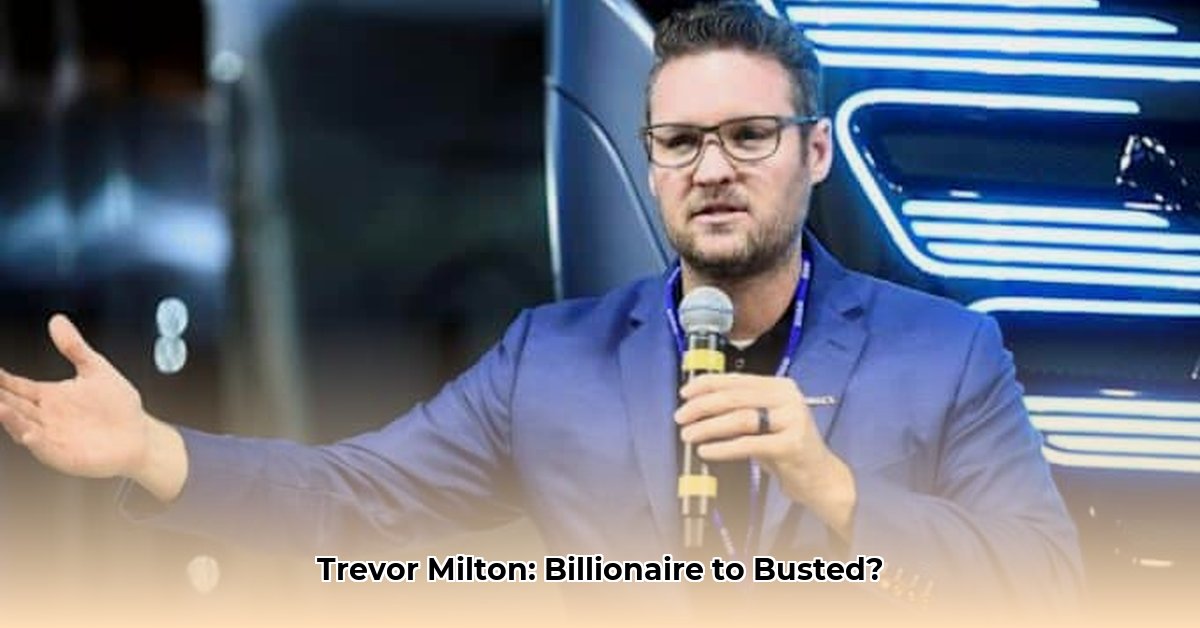
The Meteoric Rise and Spectacular Crash of Nikola's Founder
Trevor Milton's journey from near-billionaire to convicted felon is a cautionary tale of ambition, deception, and the high cost of corporate fraud. His creation, Nikola Corporation, promised a revolution in the electric vehicle industry, briefly propelling Milton to immense wealth. But his empire, built on hype and misleading claims, ultimately collapsed under the weight of its own falsehoods. This article explores the details of Milton's financial rollercoaster, the legal battles that followed, and the lasting impact of his actions on the green energy sector and investor confidence. Understanding this case is crucial for navigating the complexities of the ever-evolving green tech investment landscape. How did a visionary entrepreneur become a symbol of corporate fraud, and what can we learn from his downfall?
The rapid growth in green tech investments presents both incredible opportunities and substantial risks. How can investors protect themselves and still participate in this critical sector? One compelling case study: Trevor Milton.
The Nikola Narrative: Hype, SPACs, and a House of Cards
Milton masterfully leveraged the burgeoning excitement surrounding electric vehicles and clean energy. He painted a vivid picture of a revolutionary future powered by Nikola's cutting-edge technology, a narrative that resonated strongly with investors. Utilizing the relatively new mechanism of Special Purpose Acquisition Companies (SPACs) – companies formed solely to raise capital through an IPO and merge with a private company – Nikola’s stock valuation skyrocketed, directly boosting Milton’s net worth. His personal wealth grew exponentially, fueled by investor enthusiasm, despite the fact that many of Nikola's technological claims were demonstrably false or exaggerated. This rapid ascent, however, was ultimately built on a foundation of deceit. The question remains: How did Milton's deceptive practices contribute to both his financial success and his eventual downfall?
One pivotal point to understand Milton's rise is the power of narrative. He successfully crafted and marketed a compelling story of innovation and environmental responsibility, capturing the imagination of numerous investors, even without tangible evidence of the claimed innovations. This highlights the potential for manipulative narratives to drive stock prices and mask underlying weaknesses within a company. The question remains: How can investors be better equipped to identify and avoid similar situations?
The Hindenburg Report: Exposing the Truth
The seemingly unstoppable rise of Nikola came to a sudden and dramatic halt with the publication of a scathing report by Hindenburg Research. This investigative firm meticulously documented inconsistencies and outright falsehoods in Nikola's technological claims, revealing a company whose innovative image was largely a fabrication. This report became the catalyst for Nikola's stock price to plummet, wiping out billions in investor value and severely impacting Milton's own net worth. The Hindenburg report acted as a shocking reality check, highlighting the critical need for due diligence and transparency in the financial markets. The question remains: What specific red flags should investors look for when evaluating green tech investments?
The collapse of Nikola's stock price offers a quantifiable example of the consequences of unchecked narratives and false promises. Billions of dollars in investor wealth evaporated almost overnight, underscoring the significant financial risks associated with investing in companies lacking credible technological foundations. This event serves as a stark reminder to investors about the importance of thorough due diligence and fact-checking before committing capital. How can we ensure more accountability within the green tech sector?
The Legal Reckoning: Conviction and Sentence
The exposure of Nikola's fraudulent activities led to Milton's eventual indictment and conviction on multiple counts of securities fraud. His criminal charges stemmed from deliberately misleading investors about the company's technology and capabilities. The legal battle and subsequent sentencing sparked significant debate regarding the sentencing disparities in white-collar crimes, with many critics arguing that the punishment did not fully reflect the magnitude of harm inflicted on investors. The case serves as a focal point in ongoing discussions on the appropriateness and consistency of legal consequences for corporate fraud. What are the implications of the case for future regulations and investor protection?
Dr. Anya Sharma, Professor of Law at Stanford University, notes: "The inconsistencies in sentencing across white-collar crime cases highlight the ongoing need for reform. The consequences should reflect the magnitude of financial harm and investor trust betrayed."
Lessons Learned and Mitigating Risk
The Nikola case offers several crucial takeaways for investors in the green technology sector. These include:
- Thorough Due Diligence: Independent verification of technical claims is paramount. Relying solely on company marketing materials is insufficient.
- Technology Maturity Assessment: Distinguish between proven technologies ready for market scale and those still in early-stage development, bearing significantly higher risk profiles.
- Management Scrutiny: Careful examination of leadership's history and commitment to transparency is necessary for mitigating risk.
- Financial Transparency: Demand clarity and accuracy in financial disclosures from potential investment targets.
By implementing these strategies, investors can significantly reduce their exposure to fraudulent activities and navigate the green tech sector more effectively.
Trevor Milton's Net Worth: A Lasting Legacy of Caution
Milton's story serves as a potent cautionary tale about the dangers of unchecked ambition and the high price of corporate fraud. His once-substantial net worth evaporated as quickly as it had grown, leaving behind a legacy of lost investor trust and financial ruin. However, the enduring impact extends beyond the personal consequences for Milton. His case has highlighted the vulnerability of investors to misleading narratives and the critical need for greater transparency and accountability within the booming green technology sector. The question remains: How will the financial industry adapt in the wake of the Nikola scandal to better protect itself and its investors from similar events?